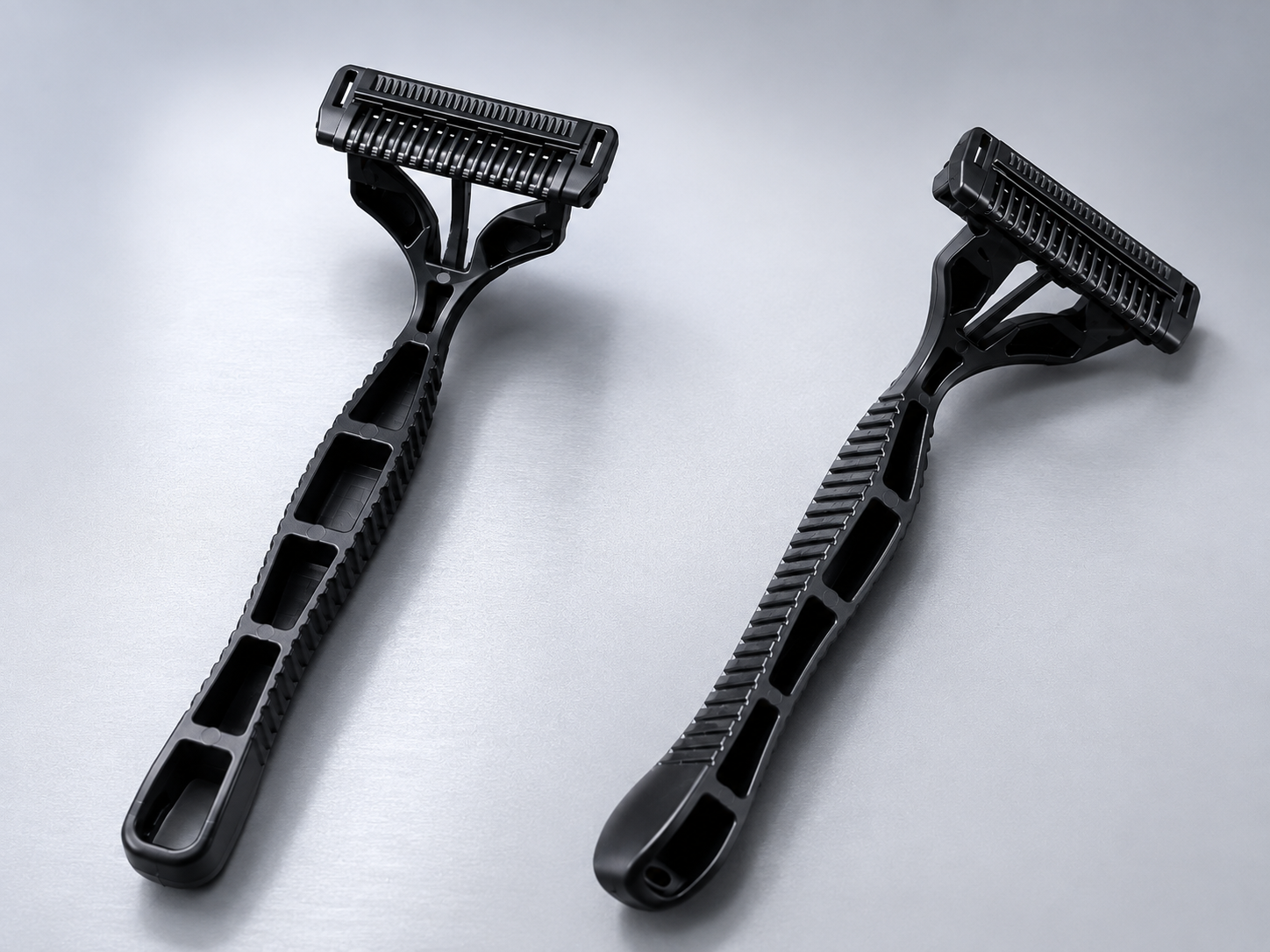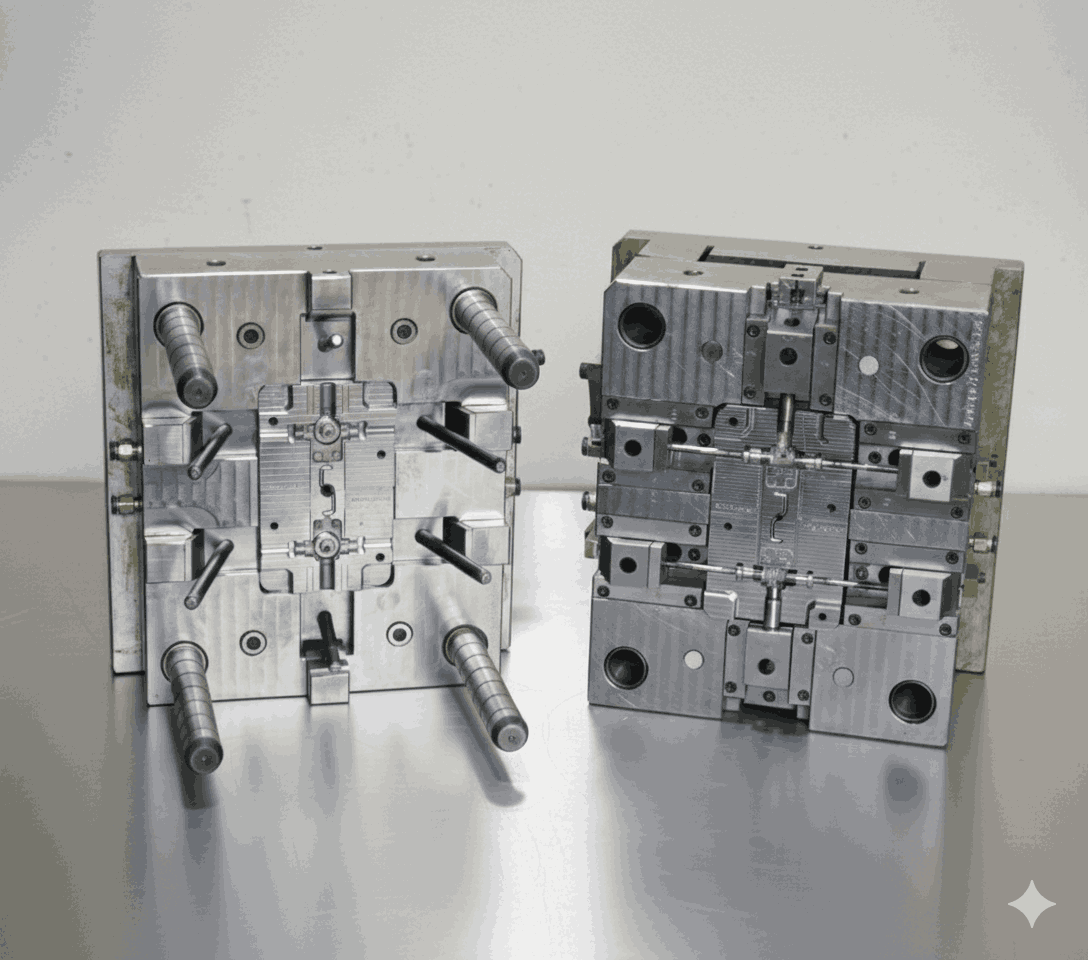
If you have ever held a plastic bottle cap, a car dashboard component, or the housing of an electronic device, you have held an injection-molded part. Injection molding is the single most widely used process for manufacturing plastic components at scale — and for good reason. It is fast, consistent, cost-effective in volume, and capable of producing highly complex geometries with tight tolerances.
Yet many product teams and procurement managers work with molded parts every day without a clear picture of how the process actually works, what it costs, or how to choose the right manufacturing partner. This guide explains injection molding from the ground up.
At FD Group, we manufacture precision molds and injection-molded components from our two plants in Pune, India, serving OEMs across automotive, consumer goods, healthcare, defence, and electronics. Here is what every buyer and engineer should understand.
How injection molding works
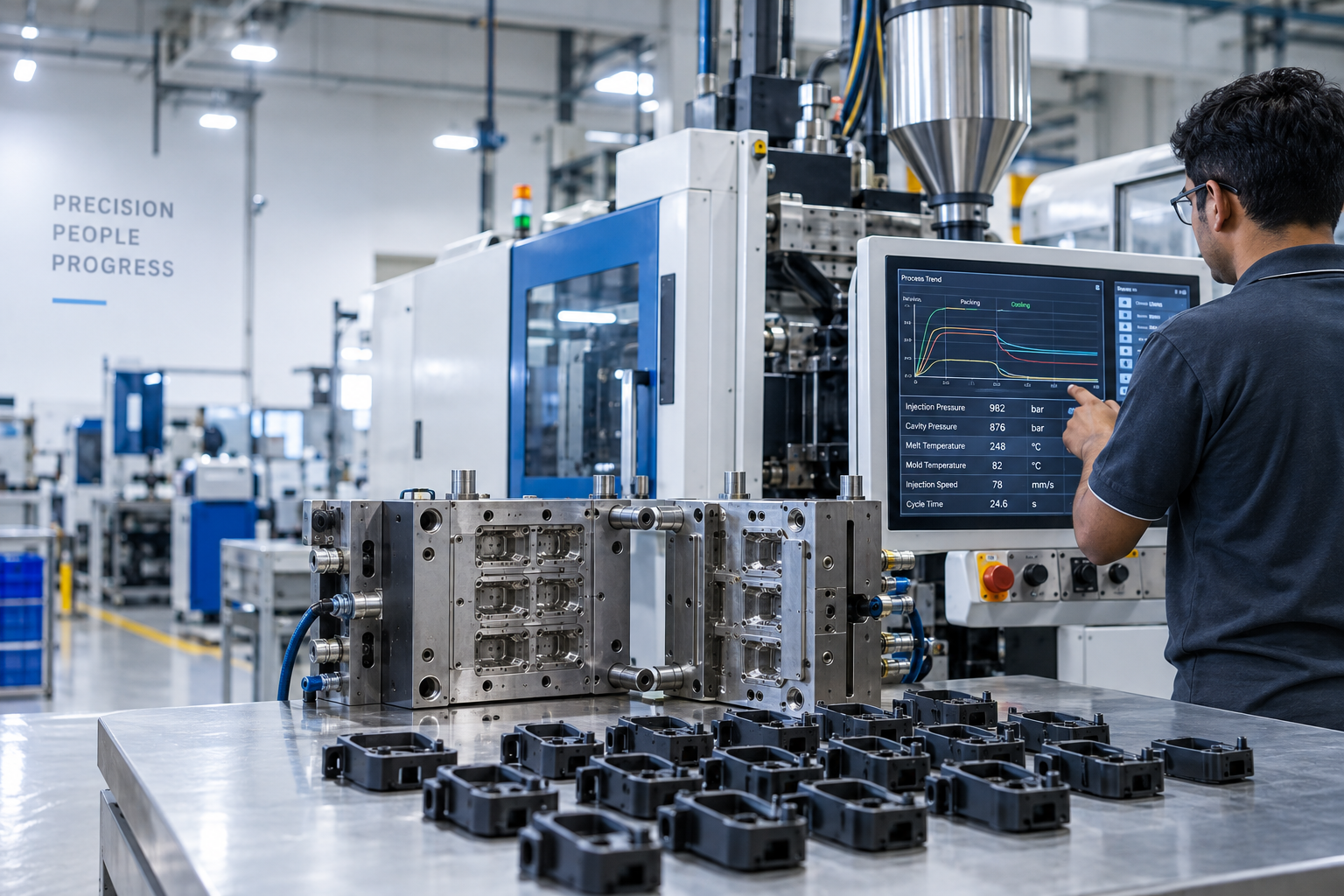
Injection molding is, at its core, a simple idea executed with great precision. Molten plastic is injected into a metal mold, cooled until solid, and ejected as a finished part. The cycle then repeats — often in seconds — producing thousands of identical parts.
The process runs in four stages:
- Clamping. The two halves of the steel mold are closed and held together under high pressure by the clamping unit of the molding machine.
- Injection. Plastic granules are heated until molten and injected into the mold cavity at high pressure, filling every detail of the geometry.
- Cooling. The plastic cools and solidifies inside the cavity, taking the exact shape of the mold. Controlled cooling is critical to part quality.
- Ejection. The mold opens and ejector pins push the finished part out. The cycle then begins again.
The quality of the final part depends heavily on the mold itself, the process parameters, and the material — which is why the choice of manufacturing partner matters so much.
The heart of the process: the mold
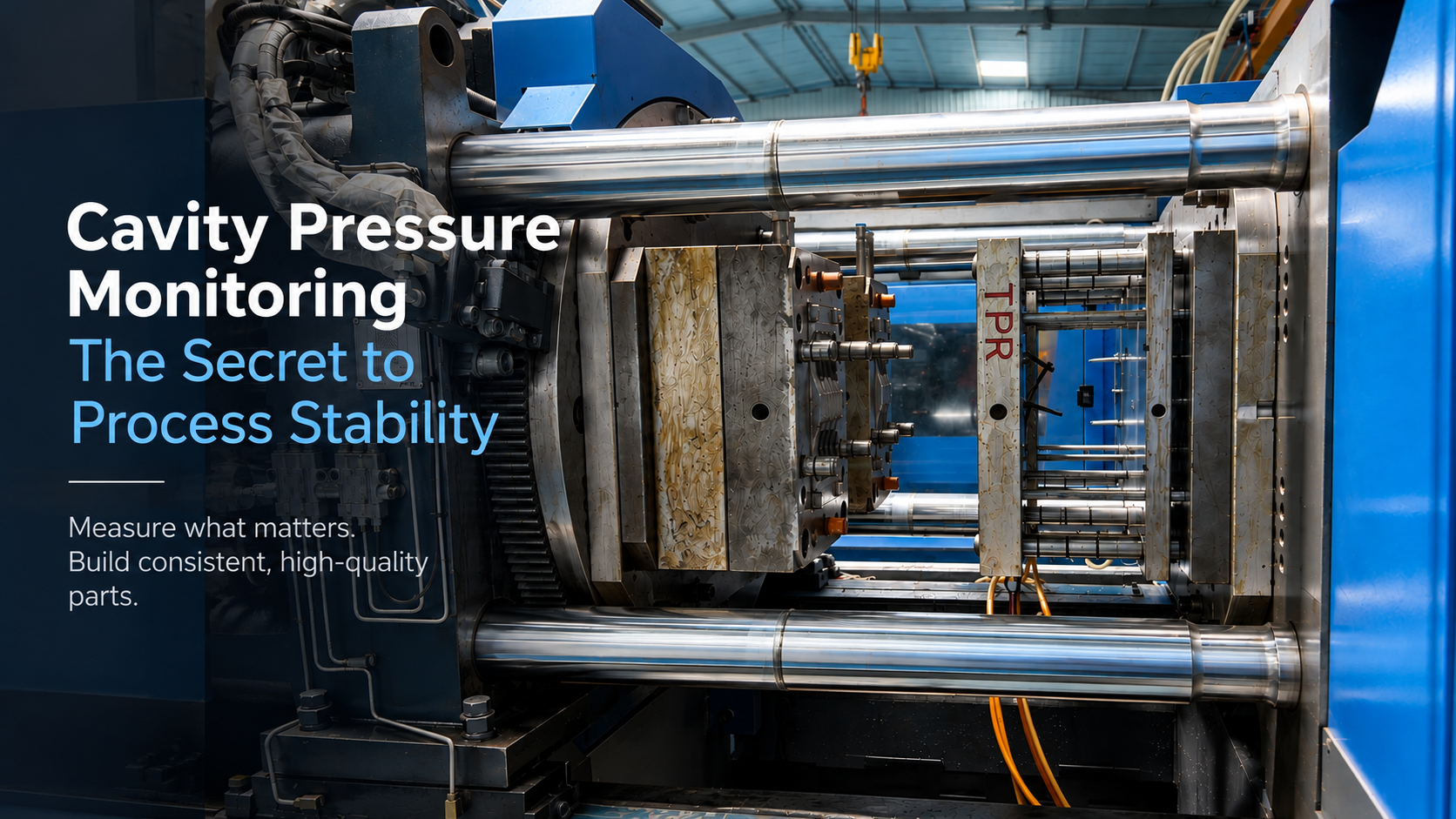
The mold (also called the tool) is a precision-engineered steel block containing the cavity that shapes your part. It is the largest upfront investment in injection molding, and its quality determines the quality of every part that follows.
Molds come in several types, and a capable manufacturer works across all of them:
- 2-plate and 3-plate molds for standard single and multi-cavity production.
- Hot runner molds that keep the plastic molten in the feed system, reducing waste and improving fill consistency.
- 2K (two-shot) molds that combine two materials or colors in a single part.
- Unscrewing and collapsible core molds for threaded or complex internal features.
- Insert and over-molding to bond plastic around metal or other components.
FD Group manufactures all of these in-house using VMC, EDM, and CNC wire machining, which gives us direct control over quality and delivery timelines rather than depending on outside toolmakers.
Materials used in injection molding
One of the strengths of injection molding is the enormous range of engineering-grade polymers available. The right material depends on strength, temperature resistance, flammability rating, cosmetic finish, and regulatory needs. Commonly used materials include:
- ABS — tough, dimensionally stable, excellent for housings.
- PP (polypropylene) — chemical-resistant and flexible, including food-grade grades.
- PC/ABS — high impact strength with good heat resistance.
- FR-ABS V0 — flame-retardant grades for electrical and safety-critical parts.
- PA6,6 (nylon) — strong, wear-resistant, ideal for mechanical components.
- BPA-free PC — for products with health and safety requirements.
Selecting and validating the correct material early prevents costly problems later — something an experienced partner should guide you through before production begins.
Advantages of injection molding
Injection molding dominates plastic manufacturing because it offers:
- Low cost per part at volume. Once the mold exists, each part is inexpensive, and the per-unit cost keeps falling as volume rises.
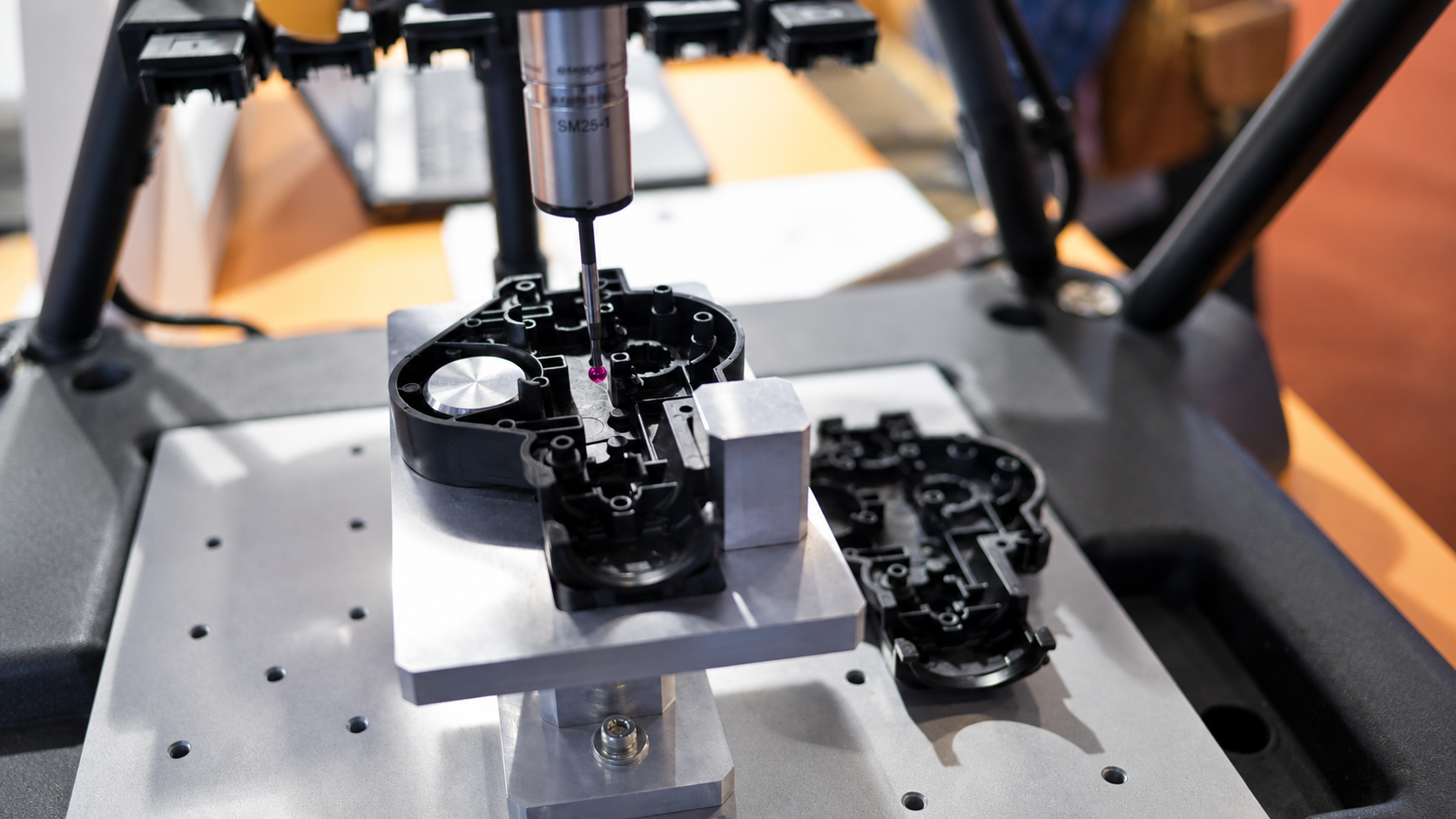
- Exceptional consistency. Every part matches the last within tight tolerances, verified by CMM inspection and process capability (Cpk) tracking.
- High-quality finish. A-class cosmetic surfaces with no visible sink marks or weld lines, straight off the machine.
- Design freedom. Complex geometries, fine detail, and multi-material parts are all achievable.
- Scalability. The same tool can support production from tens of thousands to millions of units.
Common buyer mistakes to avoid
Buyers new to molding often run into avoidable problems:
- Skipping DFM review. Design for Manufacturability issues found on paper cost a fraction of what they cost once steel is cut. FD Group reviews every drawing for DFM before tooling begins.
- Choosing a supplier on price alone. A low tooling quote from an inconsistent supplier often costs more in rejects, delays, and rework.
- Underestimating tooling lead time. Molds take time to build correctly; planning early protects your launch date.
- Ignoring material validation. The wrong grade can fail in the field even if the part looks perfect.
Applications across industries
Injection molding is everywhere: automotive interior and under-hood components, consumer appliance housings, electrical and electronic enclosures, medical device parts, toys, and defence components. If a product needs consistent plastic parts in volume, molding is almost always the process behind it.
Why choose FD Group
International buyers work with FD Group because we operate like an engineering partner, not a job shop:
- Established and certified — operating since 2015, ISO 9001:2015 certified, with 1,200+ molds delivered and clients across 7+ countries.
- End-to-end under one roof — design, in-house tooling, molding, assembly, quality inspection, and dispatch, reducing handoffs and delays.
- Built for scale — capacity from 10,000 to 10 million units, with a shot weight range of 0.5 g to 2,000 g on modern Shibaura and FCS machines.
- Quality built in, not inspected in — CMM inspection, Cpk tracking, and full traceability from raw material to finished component.
Conclusion
Injection molding is the backbone of modern plastic manufacturing — a proven process for producing consistent, high-quality parts at scale and at low cost per unit. The results, however, depend entirely on the mold, the process control, and the partner behind them.
If you are planning a new component or looking to move a validated design into production, our engineers are ready to review your requirements and guide you to the most economical, production-ready path. Talk to our engineers or request a quote at www.fdgroup.co.in — or email director@fdgroup.co.in to start your OEM project.